The Wood-Fired Sauna: Its Nordic Origins and Incredible Benefits
Table of Contents
Everything that Finnish tradition has taken millennia to build, everything that Nordic science has gradually documented, is accessible here, at 1,550 meters at the foot of the Rocher du Glaisy.
A ritual dating back ten thousand years
In Finland, there is a word that doesn’t really have an equivalent in French: sisu. It refers to a kind of inner resilience, an ability to persevere when things get tough. And the sauna, over there, is one of its guardians. For ten thousand years, Finns have been born in the sauna, washed in the sauna, and made important decisions in the sauna. Even today, the country has more than three million saunas for a population of five and a half million. It’s not just a facility—it’s a philosophy.
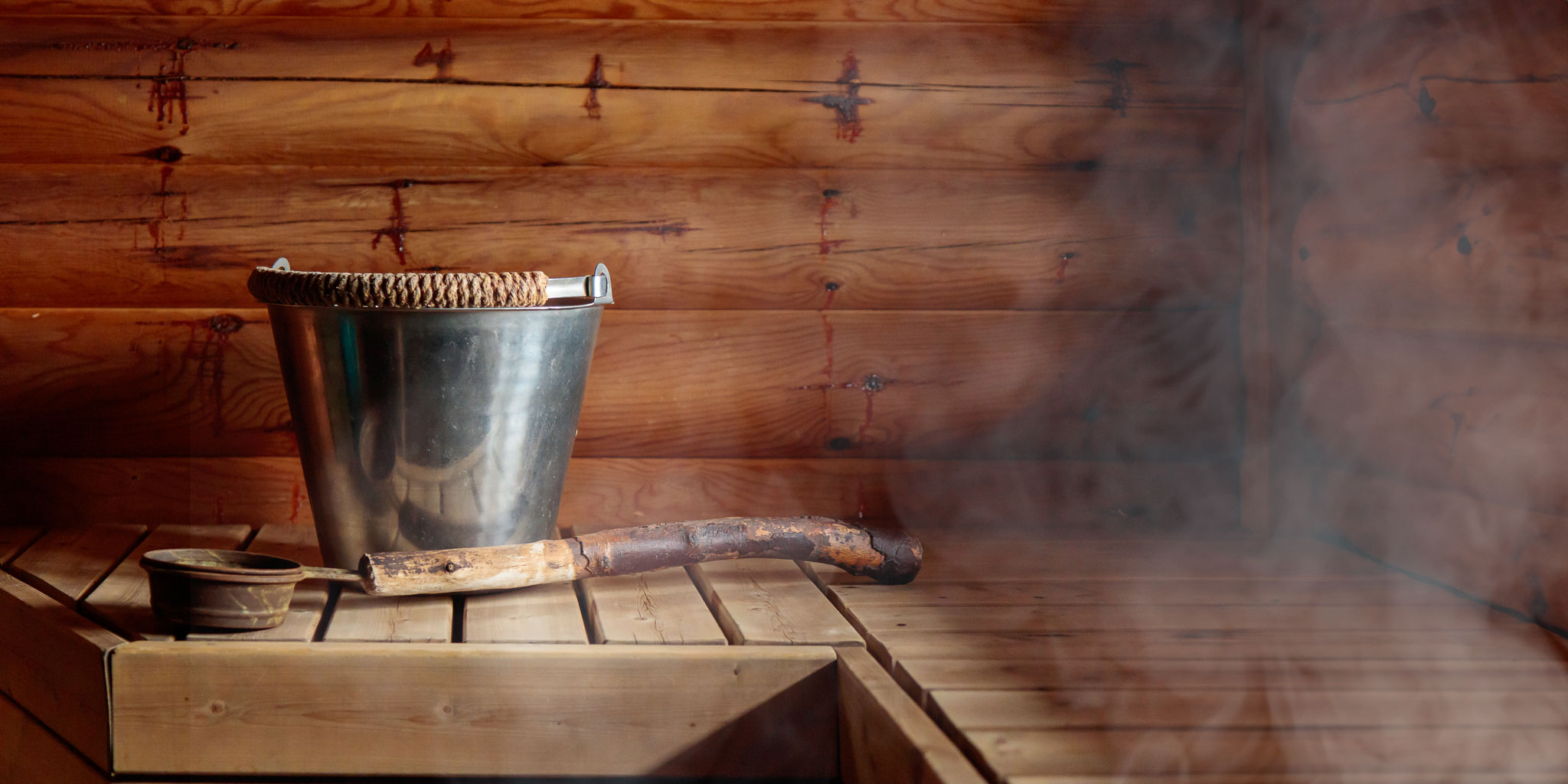
The traditional wood-fired sauna is the oldest and purest form of this practice. No electronic thermostat, no digital programming. Just fire, stones, water, and time. The heat rises slowly, settling into the wood of the walls, the stone of the stove, and the thick, enveloping air. When water is poured onto the scorching stones (known as “löyly” in Finnish, a word that refers to both steam and the soul), something happens that cannot be fully explained by physics alone.
Vidian, co-founder of Stüga, knows this better than anyone. As a snowshoe and dog-sled guide in Finnish Lapland, he has lived and traveled throughout Scandinavia, Finland, and Russia—cultures of the cold where the sauna is as natural as a fire in the hearth. It is this heritage that he sought to establish in the Tarentaise Valley, at the foot of the Rocher du Glaisy.
What Science Says About It
For the Heart and Circulation
A Finnish study published in *JAMA Internal Medicine* (Laukkanen et al., 2015) followed 2,315 Finnish men for twenty years. The results showed that those who used the sauna 4 to 7 times a week reduced their risk of cardiovascular mortality by 50% compared to those who used it only once. The intense heat causes vasodilation: blood vessels widen, circulation speeds up, and the heart works at a rate comparable to that of a moderate walk.
For Muscles and Recovery
Heat promotes deep muscle relaxation and accelerates the elimination of lactic acid, making it a natural ally after physical exertion. For climbers, hikers, or skiers, it’s a practical solution to the demands the day has placed on the body.
For the skin
Intense sweating in a wood-fired sauna opens the pores, removes impurities, and stimulates cell renewal. Dermatological studies have shown positive effects on certain chronic skin conditions, particularly psoriasis.
For the immune system
The heat induces artificial hyperthermia, which stimulates the production of white blood cells. Research conducted at the University of Munich has shown a significant increase in immune defenses after regular sessions.
For the Mind
Prolonged heat promotes the release of endorphins and reduces levels of cortisol, the stress hormone. Recent Scandinavian studies are exploring its role in preventing depression and anxiety, with promising results, particularly when combined with hot-cold contrast therapy.
An important point
If you have cardiovascular disease, high blood pressure, or are pregnant, consult a doctor before using the sauna. The intense heat places significant strain on the cardiovascular system.